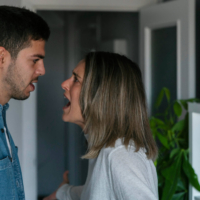
It can feel confusing when a small disagreement suddenly turns into a big fight. One minute you’re talking about something minor — being late, how the house is organized, or how something was said — and the next minute you and your partner are arguing, frustrated, and wondering how the conversation escalated so quickly.
Many couples are surprised when this happens, especially if the relationship is generally loving and supportive. As Gal Szekely, director of The Couples Center, often hears from couples in counseling and workshops, “We have a good relationship, we feel close, but small things suddenly turn into big arguments.”
According to Gal, there’s an important reason for this.
“Actually, there are no small disagreements. The topic might look small, but the meaning of it is much bigger.”
What looks like a minor issue on the surface often carries a deeper emotional meaning underneath it. When couples start to understand that deeper layer, conflicts begin to make much more sense — and they also become easier to navigate.
If recurring arguments are creating distance in your relationship, learning a few communication tools can make a meaningful difference. Reach out to us today.
According to Gal, what looks like a small disagreement on the surface usually has a deeper emotional meaning underneath it.
“Actually, there are no small disagreements. The topic might look small, but the meaning of it is much bigger.”
Many arguments that couples fight about repeatedly — being late, household tasks, spending habits — are actually tied to deeper emotional needs, values, or past experiences.
Relationship researchers have found that most arguments are not about the surface issue, but about deeper needs that feel unmet.
In fact, studies suggest that about 69% of relationship conflicts are ongoing differences in personality, values, or habits that may never fully disappear.
This doesn’t mean the relationship is unhealthy. Conflict is a natural part of relationships. What matters most is how couples communicate and respond to those disagreements.
Many couples find themselves having the same fights again and again.
When this happens, it often signals that the real issue hasn’t been addressed yet.
Gal offers a helpful rule:
“If you’re talking about something and it takes more than three minutes to resolve, it’s usually not about the issue anymore.”
When conversations last longer, and emotions intensify, it often means the disagreement has touched something deeper — a value, a fear, or an emotional trigger.
For example, one partner may feel disrespected, while the other simply feels rushed. One partner may feel worried about money, while the other values generosity and hospitality.
Without understanding the deeper meaning behind the conflict, couples may continue repeating the same argument without resolution. For couples who feel stuck in recurring conflicts, working with a couples therapist can help identify the deeper emotional patterns behind those arguments.

Another reason small disagreements turn into bigger fights is that our past experiences shape how we interpret situations.
Gal shares an example from his own relationship about being on time when visiting friends.
For him, arriving late felt disrespectful and stressful because he worried about how others would perceive them.
For his wife, arriving relaxed and emotionally present mattered more than the exact time.
“For me, it was about respecting my friends,” Gal explains. “For my wife, it was about arriving relaxed and spacious.”
What looked like a disagreement about time was actually about two different emotional perspectives. When couples understand each other’s emotional triggers, communication becomes easier, and conflicts become less intense.
Gal shares another example from his relationship involving cooking for guests.
He often felt uncomfortable when his wife prepared large amounts of food for gatherings. To him, it felt wasteful because he grew up in a family where resources were limited.
But for his wife, cooking abundantly was a way of showing care and love.
“Once we understood the emotional meaning behind it, suddenly both of us relaxed.”
Instead of criticizing each other’s behavior, they were able to appreciate the intention behind it. This shift in perspective often helps couples break destructive cycles and build a deeper emotional connection.
Healthy conflict resolution begins when couples move beyond the surface argument and explore the emotional meaning underneath it.
This requires communication skills such as:
- Practicing active listening
- Asking open-ended questions
- Assuming good intentions
- Focusing on one issue at a time
- Expressing feelings using “I” statements
Active listening allows both partners to feel heard and understood, which helps reduce defensiveness and frustration. Approaching disagreements with curiosity rather than blame also helps couples feel like they are on the same team.
Many couples learn how to explore the emotional meaning behind their conflicts through our relationship workshops, where they practice these communication skills together.

Conflict itself isn’t a problem. In fact, healthy conflict can strengthen a relationship when it is handled with empathy, patience, and mutual respect.
When couples learn to explore the deeper meaning behind their disagreements, they develop a greater understanding of each other’s emotional needs.
This creates opportunities for growth, intimacy, and a stronger connection.
Instead of seeing arguments as threats, couples can begin to see them as signals — messages pointing toward something important that needs attention. And sometimes the biggest breakthrough happens when partners realize the conflict was never really about the small thing in the first place.
If you’re ready to break the cycle of the same fights, explore the relationship support options we offer.